Jul 06, 2026
Tech, talent, and real estate: The new operational equation for legal leaders
Surging demand, rising billing rates, and AI adoption are driving the successful expansion of the U.S. legal industry’s number one growth market. Yet, the traditional law firm business model is colliding with a new reality.
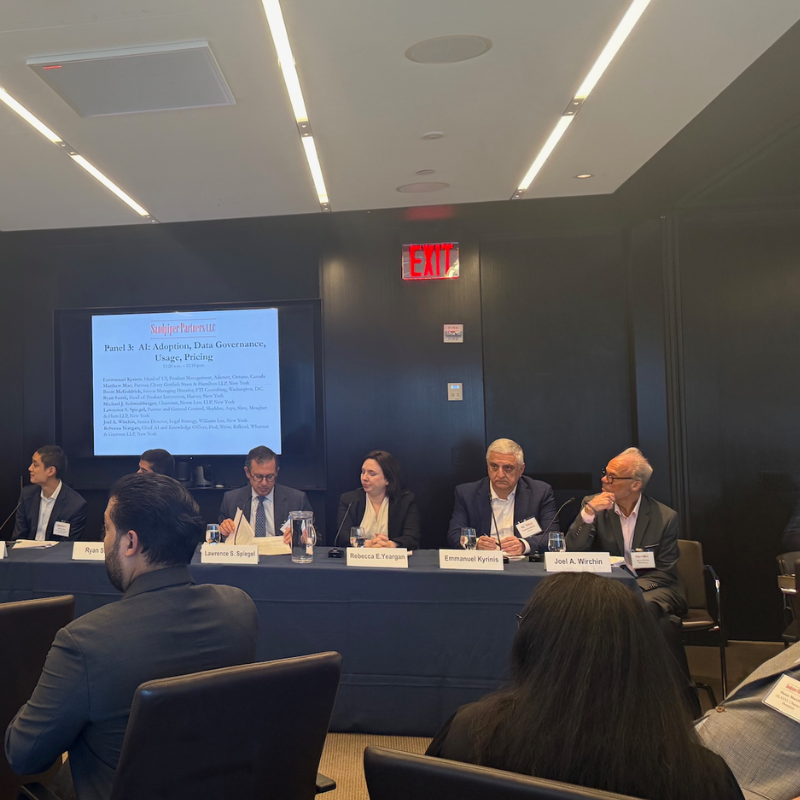
Joel Wirchin, Williams Lea’s Senior Director of Legal Strategy, joined a faculty of law firm chairs, managing partners, and corporate counsel at the 20th Annual New York Legal Market Conference in NYC on June 17 to break down the macroeconomic and operational hurdles across the legal sector and discuss what it takes to build a firm that can actually keep pace with rising demand.
The consensus from the panels was unequivocal: the initial wave of technology hype has officially given way to an intense execution phase. To maintain a competitive edge, firms can no longer rely on legacy prestige. They must navigate a new operational equation.
Here are the four strategic mandates for firm leaders navigating this new landscape.
Moving past innovation theater: The workflow engineering imperative
Buying a generative AI license is no longer a market differentiator. It is table stakes. True technological return on investment does not come from giving attorneys a blank desktop chat box. It comes from mastering the operational layer. As Wirchin noted during the panel, “where the real opportunity for transformation actually lives, is within the operational layer, the connective tissue between the tools, and how those tools actually move the work.”
Firms waste immense time and capital trying to force powerful AI tools on top of outdated legacy processes. The time is now to reframe AI as a talent and workflow initiative, not a technology project. True transformation requires re-engineering the workflow itself around the technology.
High-performing firms are actively integrating data scientists, project managers, and pricing experts directly into the delivery loop alongside senior partners. Ultimately, the most sustainable AI solutions are client-specific and engineered to be frictionless. This ensures that even tech-agnostic senior partners can leverage advanced tools seamlessly within their daily routines.
The power of “intellectual gifts”: Redefining the partnership
Corporate legal departments are operating under relentless, board-level pressure to demonstrate their own business value, speed, and cost efficiency. Because general counsels are being measured against the pace of change across their entire enterprise, they are growing increasingly intolerant of reactive outside vendors who only reach out when a bill is due or a lawsuit drops.
General counsels are actively consolidating their panels, shifting work towards providers that act as true proactive business partners. Elite firms are winning long-term client loyalty by delivering intellectual gifts. These include custom regulatory horizon scanning and deep, automated cross-market risk analyses that anticipate business problems before they materialize.
Outside counsel must provide the data and transparency that in-house teams need to confidently justify outside legal spend to their own executives and board.
The CapEx conundrum: Funding innovation in the era of the $40 million partner
Law firms are caught in an unprecedented financial squeeze. Building and maintaining a cutting-edge technological infrastructure requires millions in upfront capital expenditure. At the exact same time, a hyper-competitive lateral market is forcing firms to drain partner pools to recruit and retain elite rainmakers.
This financial tension is further complicated by corporate client perception. Corporate buyers are hyper-sensitive to public reports of partner compensation packages reaching forty million dollars. General counsels increasingly bristle at the optics of absorbing year-over-year rate increases to fund a firm’s technology stack while reading headlines about jaw-dropping partner bidding wars.
Moving forward, the challenge for firm leadership will be structural. They must find innovative ways to incentivize and reward long-term enterprise value creation rather than short-term lateral mobility.
The physical office: A strategic growth engine
For years, market prognosticators predicted that remote work policies and automated efficiencies would systematically shrink the physical footprint of the legal sector. Instead, the opposite has occurred. Top-tier law firms are driving historic levels of leasing activity, proving that premium office space remains a vital growth engine rather than a real estate liability.
Law firms have surged to become the second-largest occupier of office space in major metropolitan business hubs like Manhattan. Rather than downsizing, scale law firms are systematically outgrowing their headquarters. They are forced to take on incremental space or move entire practice groups to accommodate headcount growth and massive lateral group acquisitions.
Modernized, premium environments are treated as critical infrastructure for white-glove talent integration, multidisciplinary collaboration, and cultural cohesion. Firm leaders are refusing to compromise on space because they recognize its direct link to talent retention.
Securing your firm’s operational future
The insights from the New York Legal Market Conference confirm that operational engineering, proactive client advisory, strategic capital allocation, and physical workspace optimization are not isolated challenges. They are deeply interconnected facets of a single corporate reality. The law firms that dominate the market are those that successfully eliminate back-office friction to maximize front-office value.
For firms looking to scale at this operational inflection point, building and managing this complex infrastructure internally can place a massive burden on partner time and capital. That is where Williams Lea steps in. Discover how we elevate top-tier legal operations.