May 25, 2026
The old rules of Private Equity no longer apply
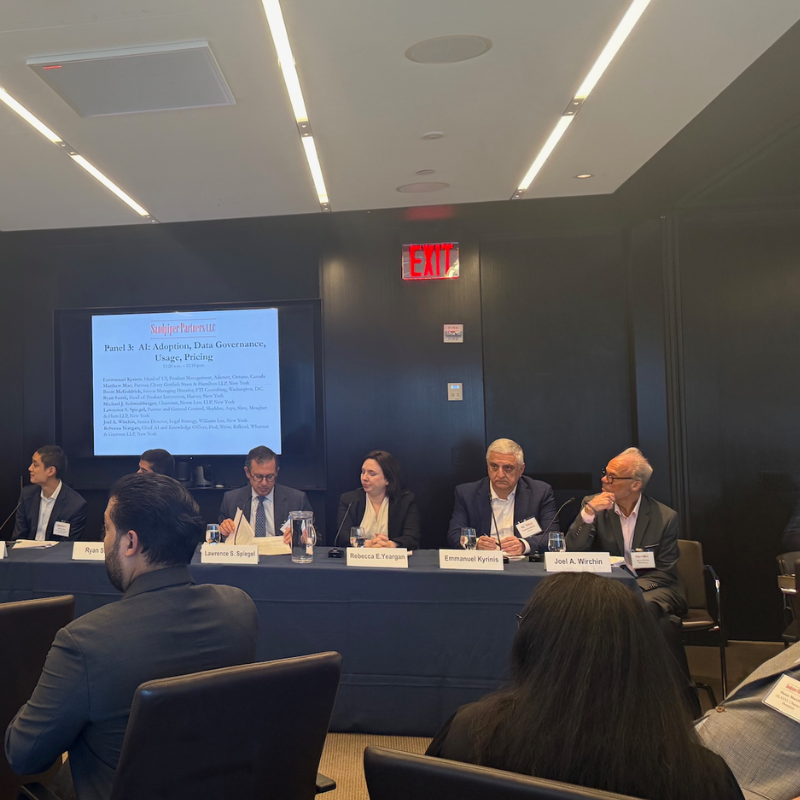
The Williams Lea team sponsored the recent Private Equity New York, sitting across from operating partners, portfolio executives, and deal leaders who are navigating one of the most complex moments in the industry’s recent history. What struck us wasn’t any single panel or keynote. It was the undercurrent running through virtually every conversation: The strategies that built the last decade of PE success are not the ones that will survive the next. The signals are everywhere, particularly in how firms are restructuring operations, rethinking vendor relationships, and scrambling to close the gap between the technology they’ve purchased and the transformation they’ve yet to achieve. These are the themes that kept coming up, and they’re too important not to share.
Stop calling AI a trend, it’s already the operating standard
The firms still “exploring” AI are already behind. AI isn’t a topic on the agenda anymore, it’s the core of every serious operational conversation in the industry. Firms are using it to analyze management teams, model projections, evaluate competitive markets, and even catch fraud in portfolio company sales logs before it surfaces in the numbers.
The more provocative question isn’t whether to adopt AI, it’s why so many firms are still using it like a fancier Google search. The firms pulling ahead are treating AI as a structural redesign of how work gets done, not a tool layered on top of broken processes. If your AI strategy is about individual productivity, you’ve already missed the point.
Outsourcing is a strategic advantage, not a shortcut
There has been a longstanding assumption in private equity operations that maintaining functions in-house is a marker of strength. Increasingly, that perspective is evolving. Leading firms are reframing the use of outsourced capabilities not as a cost tactic, but as a deliberate decision to focus internal resources on the areas that most directly drive value creation.
This shift reflects a simple reality: when highly skilled operational teams are absorbed in managing administrative processes or longstanding inefficiencies, it limits their ability to influence growth and performance. By contrast, firms that centralize and externalize non-core activities through scalable, hub-and-spoke models across their portfolio companies are better positioned to operate with consistency, speed, and focus.
The result is a clearer allocation of talent against strategic priorities and enabling operators to concentrate on initiatives that differentiate performance, rather than maintaining processes that do not.
Everyone is talking about change management, but factual execution examples are missing
This may be the most uncomfortable reality in PE operations today. Change management is referenced constantly, and yet when pressed, very few firms can describe a coherent approach to it. Technology is being purchased, AI tools are being deployed, transformation initiatives are being announced, only to die two weeks later when no one follows through.
The firms actually breaking through this pattern don’t treat change management as a soft skill or an HR afterthought. They assign dedicated transformation officers to portfolio companies, build structured communication funnels, and invest in training that creates a common language across the entire organization.
If your transformation efforts keep stalling, the problem isn’t the technology. It’s that adoption was never actually planned for.
Data is the new deal sourcing, and most firms are asleep at the wheel
When the question is posed about what separates winning PE firms from lagging ones in three years, the answer is consistent: Not more deals. Not better relationships. It’s data, specifically who owns it, who can interpret it, and who can act on it fast enough to matter.
Operations and finance teams are sitting on some of the most strategically valuable intelligence in the entire portfolio ecosystem, and most of it is trapped in disconnected systems, outdated processes, and siloed teams. You cannot close that gap on intuition and relationships alone.
Portfolio-wide data visibility isn’t a future state. It’s an immediate competitive necessity.
The exit is no longer the strategy, it’s the consequence
For years, the exit was the plan and everything else was execution. That model is cracking. Exit cycles are longer, more complex, and more competitive. Here’s the shift that should unsettle anyone still operating with a “buy, optimize, flip” mentality: AI maturity is increasingly becoming part of the valuation story itself.
Buyers are scrutinizing how operationally intelligent a portfolio company is, not just its EBITDA multiple. Outcome-based partnerships are replacing transactional vendor relationships because the market is demanding accountability for results, not just delivery of services. The firms building for this future are treating every operational decision today as a signal of exit readiness tomorrow.
If your value creation plan doesn’t include AI adoption, workforce redesign, and measurable operational transformation, it’s not a value creation plan, it’s a holding pattern.
The operational leader is now the strategic leader
The era of operations as a support function is over. We are entering a period where operational leaders, not just deal partners are defining competitive strategy. The firms that understand this are repositioning their operating partners, elevating their CFOs, and investing in the people and systems that create durable enterprise value.
The ones that don’t will find that their management teams, their processes, and their portfolio companies are already two steps behind the market.
The conversations happening inside PE right now are too important to leave to chance. Williams Lea’s latest research, The PE operating edge: Efficiency, growth, and the new operational imperative, unpacks what separates operationally excellent PE firms from those still play catch up. Download it today.